Recognizing the Principles of Company Companies


An organization firm is a sort of lawful entity that is distinct and different from its owners, that are understood as shareholders. This structure allows the corporation to own properties, sustain liabilities, and conduct business in its very own name, as opposed to for its proprietors. Among the key advantages of a business framework is restricted obligation, which implies that the personal properties of shareholders are secured from the company's debts and legal liabilities. Companies can be developed for earnings or charitable purposes and vary extensively in dimension-- from little, privately-held companies to large, publicly-traded entities. The procedure of creating a company includes numerous lawful steps, including the declaring of a charter file, normally called the Articles of Consolidation, with the relevant governmental body.
In enhancement to minimal obligation, firms provide various other substantial benefits such as continuous presence and the ability to raise capital with the sale of stock. Perpetual presence suggests that the firm can remain to operate indefinitely, despite changes in possession or monitoring. This attribute is especially essential for ensuring the durability of a company. Raising resources is promoted by the company's ability to provide shares of supply, standing for ownership rate of interests in the business. These shares can be dealt, offering liquidity and the capacity for gratitude in worth. this article face particular challenges, such as extra rigid regulatory demands and greater administrative overhead contrasted to other service forms like sole proprietorships and collaborations. Recognizing these complexities is essential for any individual included in or preparing to engage with a company entity.
Comprehending the Structure and Feature of Business Corporations
A service firm, generally described simply as a corporation, is a complex yet basic entity in the worldwide economy that exists as an independent lawful entity, unique from its owners. This legal separation gives the investors with restricted liability, which suggests their individual assets are protected from the firm's debts and lawsuits. Structurally, firms are composed of stakeholders consisting of police officers, investors, and supervisors, each playing distinct functions. Investors are the owners of the corporation, spending capital and in return, getting shares that represent their equity stake. They have voting legal rights which are mainly worked out throughout yearly basic conferences and can significantly influence the corporation's plan by electing the board of supervisors. The board of directors, chosen by the investors, oversees the broader calculated vision of the firm and designates the elderly monitoring that are accountable for the daily functional tasks of the company. This splitting up of power makes certain a balance within the corporation, promoting efficiency and permitting for specialized management. Corporations can elevate funding for development and operations with the issuance of bonds and supplies, a crucial advantage over various other service types that could depend exclusively on restricted inner funds or personal lendings from financial institution. This capability to increase big amounts of funding makes it less complicated for corporations to grow, buy new jobs, and improve their technical base, consequently boosting their one-upmanship on the market. Furthermore, the continuous presence of companies implies they proceed running despite adjustments in ownership or management, which supports the service environment and facilitates lasting preparation and growth. Recognizing these facets of a firm is crucial for anyone wanting to involve with or examine the company field, using insights right into how major company decisions are made and carried out at the highest degree.
Understanding Business Structures and Their Features
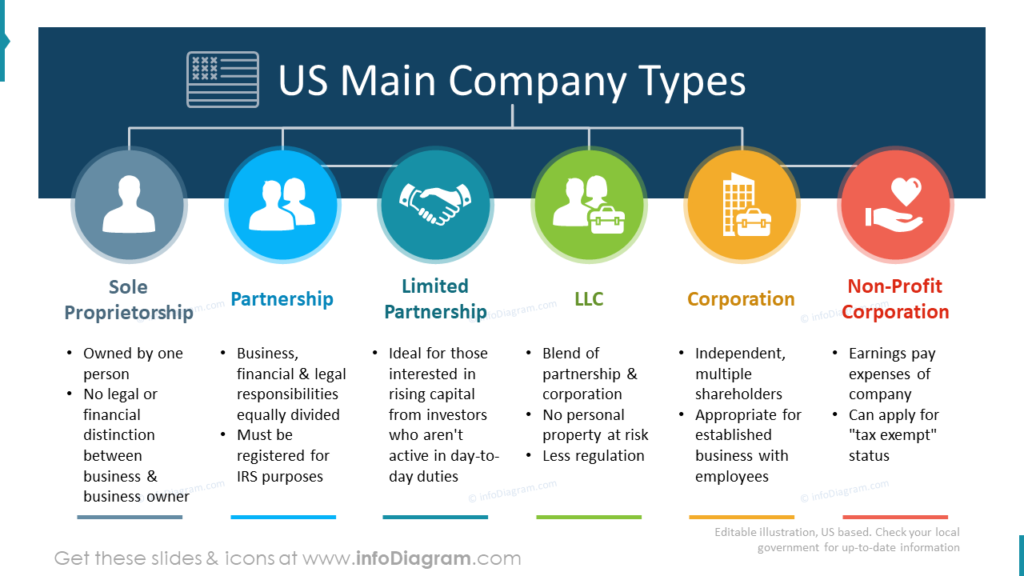
When diving right into the world of business companies, it is critical to grasp the diverse organizational structures that these entities can think, each tailored to fulfill certain business needs and calculated goals. Normally, companies are structured in such a way that divides the proprietors from the monitoring, securing personal assets from organization liabilities while cultivating a setting for elevating funding. One of one of the most usual forms is the C-corporation, under which business entity is strained independently from its proprietors, offering a crucial advantage in regards to responsibility protection and potential for growth. The S-corporation deals a various tax obligation strategy, permitting profits and losses to pass straight to investors, hence avoiding the dual taxes often associated with C-corporations. Apart from taxation subtleties, the internal governance of these companies is critical for keeping functional efficacy and lawful conformity. This administration is generally taken care of by a board of directors, elected by shareholders, which makes significant choices and manages the overall approach of the company. The everyday operations, nonetheless, are taken care of by officers and various other executives that are selected by the board. This splitting up of powers is essential in making sure that the interests of investors are sufficiently represented which the firm runs efficiently without problems of rate of interest. Firms often benefit from being able to issue numerous types of supply, which can draw in diverse investors with different cravings for threat and involvement. Usual investors typically have voting civil liberties and the possibility for dividends, which varies with the business's profitability. In comparison, liked investors typically receive fixed returns and do not commonly delight in voting legal rights, yet have concern over common investors in property distribution upon firm dissolution. get redirected here deal with rigid regulative needs, ranging from the initial enrollment and periodic reporting to conformity with ecological, safety, and employment laws. These guidelines make certain that the firm operates transparently and remains responsible to its stakeholders, consisting of staff members, financiers, and the area at large. Recognizing these legal and useful complexities is essential for any person involved in or with business entities, as it not only helps in making educated financial investment decisions yet also in assisting company administration and operational methods.
Comprehending the Framework and Operations of Organization Firms
Organization corporations are complex entities characterized by intricate frameworks and varied operational mechanisms that are fundamental to their success in the open market landscape. Typically established as legal entities separate from their owners, firms can having possessions, incurring liabilities, and go through certain regulatory environments relying on their geographical locations and industries. The structure of a company is normally specified via its bylaws, which are adopted by its board of supervisors and describe the functions and duties of the officers, shareholders, and directors. The board of supervisors, elected by the shareholders, holds the utmost decision-making power and is accountable for setting wide goals and plans, managing administration, and ensuring the firm's conformity with appropriate legislations and policies. Monitoring, led by the CEO and other exec policemans, deals with the everyday operations, driving the calculated vision of the company ahead and taking care of the general company events. This division of functions enables an equilibrium between lasting tactical planning and temporary operational execution, which is essential for driving development and flexibility in a rapidly changing service atmosphere. Investors, as the proprietors of the corporation, can vote on critical problems, such as the political election of directors and major corporate actions, including mergings, acquisitions, and the sale of substantial possessions. Additionally, corporations must stick to a variety of lawful and honest requirements, consisting of those relevant to financial openness, environmental regulations, and labor techniques. The importance of company governance can not be overstated, as it entails the mechanisms, processes, and relations whereby firms are managed and guided. Governance painting company in los angeles california and methods reflect the business culture and market setting in which the firm runs and are important for attracting financial investment, preserving market self-confidence, and eventually safeguarding long-lasting sustainability. Recognizing these components of organization corporations not just helps in navigating the company globe yet likewise in acknowledging the potential obstacles and locations where corporate administration can either weaken a corporation or boost's success. The organized technique to managing these aspects identifies the overall performance and efficiency of a firm, directly influencing its capacity to introduce, adapt, and prosper in an ever-evolving global market.
Strategic Development and Difficulties in Modern Company Firms
As service companies progress, they commonly encounter an intricate range of obstacles and chances that can significantly affect their growth trajectories and market placements. One essential element of modern business method entails browsing the swiftly altering technical landscape. This not only calls for substantial financial investment in brand-new technologies however likewise mandates recurring training for employees to equal market improvements. Moreover, globalization has actually urged companies to operate across varied social and governing environments, which presents a layer of complexity in regards to compliance, operations, and tactical preparation. Firms need to thoroughly stabilize neighborhood customizeds with global company techniques to keep a harmonious functional circulation and comply with international requirements.
One more essential aspect in the critical development of business firms is technology monitoring. In today's hyper-competitive setting, continual advancement is not simply a necessity but a benefit. This includes the growing of a entrepreneurial and innovative atmosphere within the business, motivating risk-taking and the expedition of new company models. Lots of firms are now spending in start-up incubators and accelerators to foster development and possibly get very early accessibility to innovation innovations or items. Moreover, the increase of digital advertising and marketing and e-commerce has transformed conventional company designs, pushing corporations to take on more digitally-centric approaches. This shift not just influences exactly how solutions and items are marketed however likewise exactly how they are delivered to consumers.
Furthermore, sustainability and business social obligation (CSR) have become integral to corporate method, affected by increasing consumer and stakeholder awareness about social and ecological issues. Organizations are now anticipated to not only concentrate on profitability yet also add positively to society and the environment. This shift has resulted in the assimilation of lasting techniques in every aspect of organization procedures, from sourcing and manufacturing to distribution and waste management. Additionally, the growing focus on openness and principles in organization techniques has actually required corporations to take another look at and commonly overhaul their governance frameworks and plans to boost accountability and make certain compliance with moral criteria.
Conclusively, while the opportunities for growth in the contemporary company landscape are large, they come with their share of difficulties. Effective companies are those that can successfully integrate innovation and innovation with a solid dedication to sustainability and ethical practices, all while maintaining versatility to adjust to ever-changing global market needs. This vibrant approach not just assists companies remain ahead in affordable markets but also forms them into durable entities efficient in shifting and standing up to economic changes sector trends.